WHAT WE SEE
The Jobs We Do Most
What each of the common repairs actually involves, and how to work out which one you are looking at.
How to use this page
These are job profiles, not sales copy. Each one describes what the fault looks like, what causes it here specifically, and what putting it right involves. If yours matches one, you already know roughly what is coming.
A snapped torsion spring on a two-car door
What you notice: a bang from the garage like something heavy dropping, then the door will not lift, or the opener strains and gives up part way.
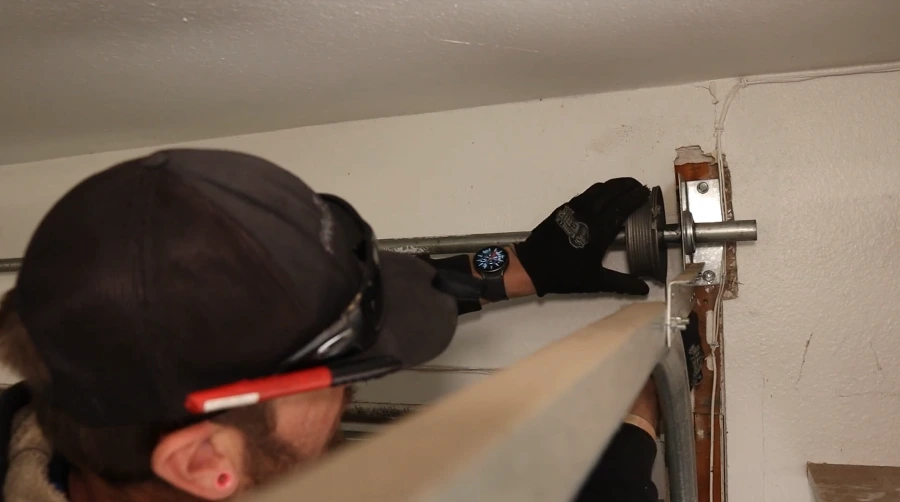
How to confirm it: look at the steel bar above the opening. A broken torsion spring shows as a clean gap of an inch or two in the coil.
What the job involves: a 16-foot double usually runs two springs and we replace both, because the second has done identical work and follows within months. The cable often comes off the drum with the spring, so drums and cables get checked as part of it. Full detail on broken spring repair.
Meanwhile: leave the door down, keep vehicles out from under it, and stop pressing the button.
A door that reverses after a dust storm
What you notice: the door starts down, then runs straight back up. It arrives in clusters, usually the week after a haboob or a hard blow off the Caprock.
How to confirm it: look at the photo-eyes a few inches off the floor either side of the opening. Steady indicator lights are good; blinking means they are not seeing each other.
What the job involves: often nothing but a dry cloth on both lenses. Where a bracket has been knocked out of line it needs realigning, and occasionally a sensor pair has genuinely failed. More on sensor faults.
A hail-dented panel that has started to bind
What you notice: visible dimpling across a section, and the door getting harder to run. After a hail event the calls come from across 79413, 79423 and 79424 at once.
Why it is not only cosmetic: once a panel bows, the rollers bind in the track and the opener fights it on every cycle.
What the job involves: single-panel replacement where the section is still manufactured, full replacement where it is not. Photograph the damage in good light first — this is usually an insurance matter. See hail damage and insurance.
A door off its track
What you notice: the door sits skewed in the opening, often jammed part way, sometimes with a visible gap between roller and track.
What causes it here: worn rollers first. Caliche grit works into the bearing, the roller develops flat spots and starts to climb rather than roll. Impact and wind account for most of the rest.
What the job involves: the door is brought back into the track under controlled tension and the rollers are replaced. Bent track sections get replaced, because otherwise it will do it again. See off-track repair.
An opener that has lost its travel limits
What you notice: the door stops short of the floor, or hits the floor and bounces back up.
What the job involves: resetting the travel limits, which on many units is a five-minute adjustment. On older openers a worn limit assembly is the actual fault and it is an inexpensive part. See opener limit settings.
Get it fixed today
If yours sounds like one of these, say so on the call and we will confirm it.