Emergency Repair · Same-Day
Broken Garage Door Spring Repair in Lubbock
Heard a bang from the garage and now the door won’t lift? That’s almost always a torsion spring. Leave it down and call us.
Do not try to lift the door
This is not us being over-cautious. The U.S. Consumer Product Safety Commission has published on garage door and opener hazards for decades, and the CPSC is the body that drove the 1993 federal requirement for photo-eye sensors and auto-reverse on residential openers. A torsion spring stores enough energy to take a hand off.
A garage door with a broken spring weighs 150 to 400 pounds with nothing holding it up. The springs carry the weight, not the opener. With one broken, the only thing between that door and the floor is whatever is holding it at that moment.
Pull the red emergency release cord, leave the door closed, and keep cars and people out from under it. Don’t keep pressing the opener button — you’ll burn out the motor trying to lift a load it was never designed to carry.
How do I know if my garage door spring is broken?
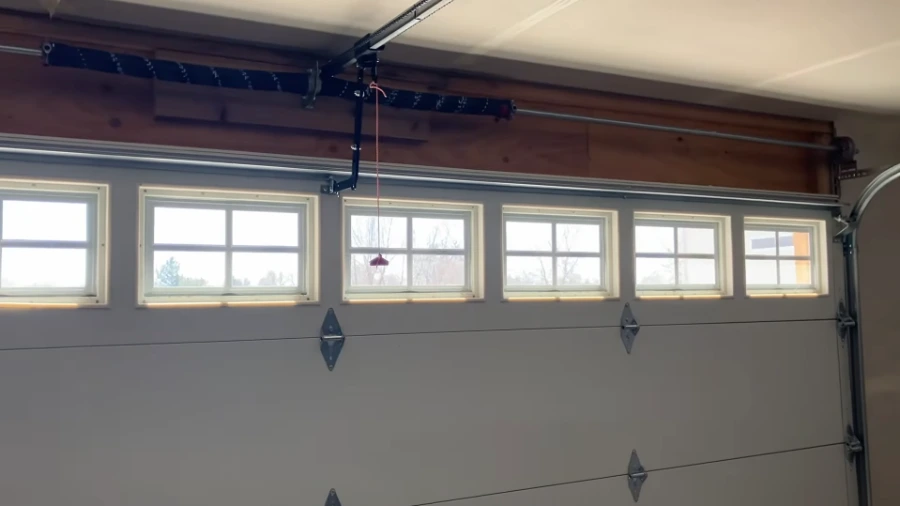
Four signs, and most people have two or three of them.
- You heard a loud bang. People describe it like a gunshot, often overnight or on a cold morning with nobody near the garage.
- The opener strains, hums, or lifts it a few inches and stops. The opener is fine. It just can’t lift an unbalanced door.
- There’s a visible gap in the spring on the bar above the door, usually an inch or two of separated coil.
- The door is far too heavy to lift by hand. A balanced door should lift with about ten pounds of effort.
Why do garage door springs break sooner in Lubbock?
Springs are rated in cycles, not years. One cycle is one open and one close. A standard 10,000-cycle spring on a door used four times a day works out to roughly seven years on paper. In Lubbock we routinely see them go sooner, for two reasons.
The temperature swing
January mornings sit near 28°F and July afternoons run about 93°F, with sudden fronts on top of that. Spring steel expands and contracts through every one of those swings while already under constant tension. That accelerates metal fatigue beyond what the cycle rating assumes.
It’s also why so many springs let go on the first genuinely cool morning of the fall. The metal has been fatiguing all summer and the temperature drop is simply the last straw. If yours broke overnight with nobody touching it, that’s why — and it isn’t something you did.
The dust
Grit in the tracks and rollers makes the door harder to move. A door that drags puts extra load on the springs on every single cycle. The caliche dust that blows across the Llano Estacado is abrasive rather than soft, so it wears bearings instead of merely dirtying them. Keeping the tracks clean genuinely extends spring life here in a way it does not in wetter parts of Texas.
Torsion and extension springs
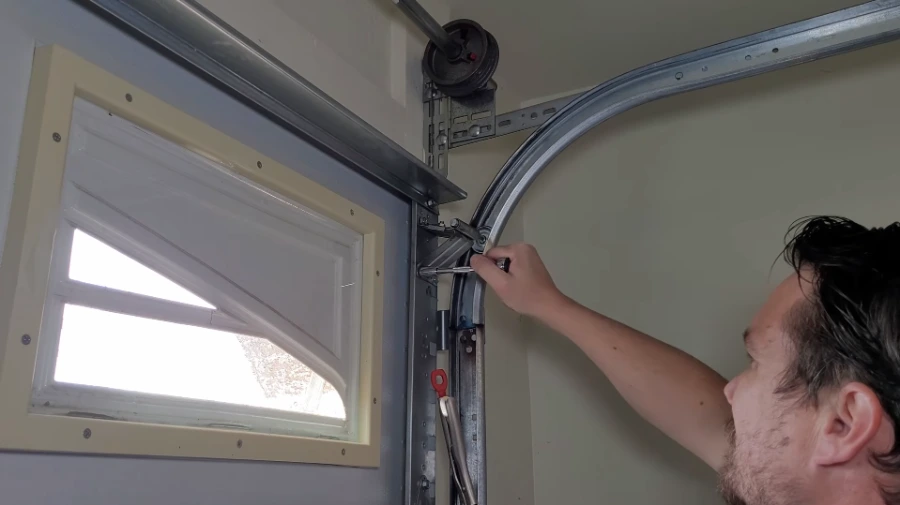
Torsion springs sit on a steel bar above the door opening and wind up as the door comes down. Most Lubbock homes built since the 1970s have these. They’re safer, last longer, and are what we fit as standard.
Extension springs run along the horizontal tracks on either side and stretch as the door closes. You’ll find these on older doors and some lighter single-car doors, common in the 1930s and 40s housing around Tech Terrace. If yours has extension springs without safety cables running through them, that’s worth fixing whatever else we do — without a containment cable a snapping extension spring becomes a projectile.
Why replace both springs at the same time?
On a two-spring door we replace the pair, and it isn’t an upsell. Both springs were fitted on the same day, have been through the same number of cycles, and have seen the same weather. When one fails the other is typically within months of the same fate.
Replacing one means paying a second service call before long. We’ll fit a single spring if you ask us to, but we’ll tell you what we think first.
What spring replacement costs
A snapped spring is the most common reason people call us in a hurry, so it is also the most common emergency garage door repair we do. It is listed alongside the rest of the jobs we do most.
We quote spring replacement on the phone, before anyone drives out. What moves the number:
- Whether the door takes one spring or two
- Door weight and size — a 16-foot insulated double needs heavier springs than a single
- Cycle rating — a higher-cycle spring costs more up front and lasts considerably longer, which is usually worth it here
- Whether cables, drums or bearings were damaged when the spring let go
Full pricing on our garage door repair cost page.
Questions we get asked
Can I replace a garage door spring myself?
We’d strongly rather you didn’t. A torsion spring holds several hundred pounds of stored energy and needs proper winding bars to release safely. Screwdrivers and lengths of rebar are how people end up in the emergency room at UMC. See who we are. Rollers, sensor cleaning, lubrication and remote programming are all reasonable DIY jobs. Springs are not.
How long does the repair take?
Usually an hour to ninety minutes for a standard residential door, assuming nothing else was damaged when the spring went.
My spring broke and the cable came off too. Is that extra?
Often the cable unwinds from the drum when a spring lets go, and that’s normal. We re-seat and re-tension it as part of the job. If the cable itself is frayed it needs replacing, and we’ll tell you before we do it.
How long should the new springs last?
Depends on the cycle rating you choose and how often the door is used. A standard 10,000-cycle spring on typical use is roughly seven years elsewhere; here, plan on less unless you go for a higher-cycle spring. We’ll talk you through the options.
Will a new spring fix a noisy door?
Not usually. Noise is far more often dry or worn rollers and dusty tracks — see general repairs. A broken spring is a sudden failure, not a gradual noise.
Get it fixed today
Broken spring? Leave the door down and call us. Most spring jobs are same-day.